Today I posted my work off for assessment. What a wonderful feeling handing that parcel over the counter at Royal Mail. Now I wait for the results.
I can now focus on my portraits paper.
Friday, 3 February 2012

Friday, 6 January 2012
Notes to Picture Essay 2
I made a few adjustments to my presentation of my photo essay after feedback from my tutor. I've added a few captions and put a wider border around the printed photos. It does look better. I'm still not certain about the last two photos. I have changed the order of those two several times. My first layout (on the table ) I put the beer can last. When I finally put it together I put the portrait of the man who had been attacked last to leave the viewer with a strong emotion at the end. I have now reverted back to the can last. I still can't decide which is better. However I feel that I do have a strong body of work and that this is a minor issue.
My first captions I put the names of everyone except for the last person. Mainly it was I didn't have his name so I put a comment as to why he had been beaten up. My tutor thought a name better than the caption I had put. He didn't know I didn't know it. I thought about and agreed it was letting the work down. So I spent another week on the streets until I got his name. It was worth it.
Overall I am quite pleased with the final version.
My first captions I put the names of everyone except for the last person. Mainly it was I didn't have his name so I put a comment as to why he had been beaten up. My tutor thought a name better than the caption I had put. He didn't know I didn't know it. I thought about and agreed it was letting the work down. So I spent another week on the streets until I got his name. It was worth it.
Overall I am quite pleased with the final version.
Thursday, 5 January 2012
Friday, 23 December 2011
Assignment Five - Notes
At last the final assignment for this paper has come together. The brief is applying the techniques of illustration and narrative as if a story for a magazine. including a cover followed by several pages telling the story.
The work I am presenting is the result of several months work. It is by no means finished but the beginning of a body of work I intend to continue with it for some time. Photographing the lives of those on the street is not the sort of work you can plan to just pop out one afternoon and shoot. I have spent months getting to know the people who live on the edges of society's expectations. All of them are fighting addiction of some sort. Alcohol, drugs and mental health issues. I have learnt a lot about friendship and trust. I am often astounded by the actions of so called ordinary members of the public. Why is it necessary to physically attack someone who asks for a few coins. Isn't "no" sufficient?
I began this work taking lovely snaps. The deal was I took their photo and gave a print in exchange. The problem with these pictures was they looked like they belonged in a family album. I still take these pictures as there is a need for this family album. Now though I am permitted to take pictures that reflect more of life as it is. I am learning their individual stories. My next step is to record their stories. First I want the story of how they arrived here. Then I want to follow where they go.
Mickey, for example told me how after 19 months in the hostel and coming off his drug habit had moved into his own apartment two days earlier. ( His partner wasn't so lucky, she died.) However he now feels isolated and lonely. I've heard this story several times now. Coming back to the street for companionship.
In presenting this narrative for my assignment using all of the skills I have obtained over the past year, the hardest was editing. I have become so close to my work it is incredibly hard to be objective. I sought the opinions of several other photographers (and my tutor) to help me be objective. I still can't believe I have been as ruthless as I have. This final selection does NOT include my best portraits! Leaving them out initially felt like cutting off my hand. What I had to do was become more aware of the viewer. They don't know the people or where it is. I worked with prints on a large table shuffling images around to get a flow. I went back through my notes over the past year and considered each of the techniques I had studied. Contrasts, elements of design, colour, lighting techniques, narrative and story telling. Earlier mistakes have not been deleted from my learning log. I find it useful to look at my learning process. Going back through the years work I am pleased with my progress. For example even my most recent errors such as my first attempt to put an essay together. The layout is dreadful.
My selection is now of images all the same orientation. I found on a previous assignment it is very difficult to jump from portrait to landscape and back again. All the pictures are taken outside only using ambient light. This changes so I have selected only those where the colour of the light is similar. The final selection have a dull day, grey/blue feel to them. I reshot the environment pictures to reflect this as well. I have chosen those with similar colours. I rejected a fabulous portrait as the colours were orange tones making the image stop the flow of the narrative. I have used a variety of wide shots and close ups to help me tell the story.
Putting the narrative together I selected one of the images to be the cover, my lead photo to draw the reader in. I begin the story with the local store where high alcohol beer is sold very cheaply. I've included group and individual images. The sign on the edge of the square prohibiting drinking on the street. Just across the road from a pub. They don't drink at the pub it is too expensive. Most pubs will have people gathered on the street outside drinking. A person from the street caught drinking on the street will be issued with an ASBO. My closing image shows the abuse often received as a result of asking for money. This is the image I want the reader to go away with. Hopefully to question their own attitudes and actions.
The work I am presenting is the result of several months work. It is by no means finished but the beginning of a body of work I intend to continue with it for some time. Photographing the lives of those on the street is not the sort of work you can plan to just pop out one afternoon and shoot. I have spent months getting to know the people who live on the edges of society's expectations. All of them are fighting addiction of some sort. Alcohol, drugs and mental health issues. I have learnt a lot about friendship and trust. I am often astounded by the actions of so called ordinary members of the public. Why is it necessary to physically attack someone who asks for a few coins. Isn't "no" sufficient?
I began this work taking lovely snaps. The deal was I took their photo and gave a print in exchange. The problem with these pictures was they looked like they belonged in a family album. I still take these pictures as there is a need for this family album. Now though I am permitted to take pictures that reflect more of life as it is. I am learning their individual stories. My next step is to record their stories. First I want the story of how they arrived here. Then I want to follow where they go.
Mickey, for example told me how after 19 months in the hostel and coming off his drug habit had moved into his own apartment two days earlier. ( His partner wasn't so lucky, she died.) However he now feels isolated and lonely. I've heard this story several times now. Coming back to the street for companionship.
In presenting this narrative for my assignment using all of the skills I have obtained over the past year, the hardest was editing. I have become so close to my work it is incredibly hard to be objective. I sought the opinions of several other photographers (and my tutor) to help me be objective. I still can't believe I have been as ruthless as I have. This final selection does NOT include my best portraits! Leaving them out initially felt like cutting off my hand. What I had to do was become more aware of the viewer. They don't know the people or where it is. I worked with prints on a large table shuffling images around to get a flow. I went back through my notes over the past year and considered each of the techniques I had studied. Contrasts, elements of design, colour, lighting techniques, narrative and story telling. Earlier mistakes have not been deleted from my learning log. I find it useful to look at my learning process. Going back through the years work I am pleased with my progress. For example even my most recent errors such as my first attempt to put an essay together. The layout is dreadful.
My selection is now of images all the same orientation. I found on a previous assignment it is very difficult to jump from portrait to landscape and back again. All the pictures are taken outside only using ambient light. This changes so I have selected only those where the colour of the light is similar. The final selection have a dull day, grey/blue feel to them. I reshot the environment pictures to reflect this as well. I have chosen those with similar colours. I rejected a fabulous portrait as the colours were orange tones making the image stop the flow of the narrative. I have used a variety of wide shots and close ups to help me tell the story.
Putting the narrative together I selected one of the images to be the cover, my lead photo to draw the reader in. I begin the story with the local store where high alcohol beer is sold very cheaply. I've included group and individual images. The sign on the edge of the square prohibiting drinking on the street. Just across the road from a pub. They don't drink at the pub it is too expensive. Most pubs will have people gathered on the street outside drinking. A person from the street caught drinking on the street will be issued with an ASBO. My closing image shows the abuse often received as a result of asking for money. This is the image I want the reader to go away with. Hopefully to question their own attitudes and actions.
Thursday, 22 December 2011
Wednesday, 14 December 2011
Rain

Rain is difficult to photograph so you need to have an image that shows the effects of rain. Lots of umbrellas is the easiest image to show rain. When I took this image I was after something that would show how unpleasant the conditions on the day were. His rain coat is sticking to him, his glasses have rain drops on them and his face shows he is not exactly happy.
I have had ideas to create a newer image but I haven't had the rain I was after and so far haven't found a willing model. I have a vision of someone caught in the rain absolutely drenched with their hair clinging to their face and raindrops falling off their nose. I'll continue to try and get that image (I can post in my next paper).
Monday, 5 December 2011
Juxtaposition
The option I have chosen to use to illustrate juxtaposition is to use the still life approach creating a book cover. I have opted for very strong subject matter using symbols to suggest a relationship. The relationship being the mutilation of a young girl and men's sexual power over women. The sole reason that young girls are subjected to this cruelty is for men's pleasure and their power over them.
I recently read an article in the newspaper that 3.500 young girls in London are subjected to genital mutilation each year. I spent a lot of time thinking about how I could create a visual image that would connect the abuse of young girls to the sexual politics of men over women. A barbie doll seemed to me to cover the later. After reading that girls are generally violated with razor blades, scissors or even glass I decided on the symbols of a girls panties with a razor blade to represent the abuse.
I have used several tools to illustrate juxtaposition. Viewpoint, symbols, lighting and colour. I've used a wide aperture to create a soft focus that aids the sense of the doll being an image of a woman. I have place the razor blade just below the print of a fairy on the panties to create the sense of lost childhood and chosen red as the background colour to represent the amount of bleeding that will occur. I've used lighting to have lots of shadow and black edges to imply that this is something hidden, not spoken openly about, yet the communities in which it happens all know about it.

I recently read an article in the newspaper that 3.500 young girls in London are subjected to genital mutilation each year. I spent a lot of time thinking about how I could create a visual image that would connect the abuse of young girls to the sexual politics of men over women. A barbie doll seemed to me to cover the later. After reading that girls are generally violated with razor blades, scissors or even glass I decided on the symbols of a girls panties with a razor blade to represent the abuse.
I have used several tools to illustrate juxtaposition. Viewpoint, symbols, lighting and colour. I've used a wide aperture to create a soft focus that aids the sense of the doll being an image of a woman. I have place the razor blade just below the print of a fairy on the panties to create the sense of lost childhood and chosen red as the background colour to represent the amount of bleeding that will occur. I've used lighting to have lots of shadow and black edges to imply that this is something hidden, not spoken openly about, yet the communities in which it happens all know about it.

Tuesday, 29 November 2011
Symbols
Find symbols for a number of concepts describe how you might use them in a photograph.
Our subjects are:
growth, excess, crime, silence and poverty.
I have found this challenge very interesting. I've carried a notebook around with me for several weeks while I thought about this. I was trying to think of symbols that are different not a cliche. Well that is extremely difficult. I've spent hours in the bookstores looking at book covers to see what ideas have already been used. For example crime novels tend to have either a dagger, drops of blood, a murder victim or graphics on the cover.
I also thought long and hard about how the photo might be used. I was reminded of the HSBC ads where they use an image and show it can mean the opposite depending on the culture. I thought of where this could happen within my subject range. An example is a photo of a child's hand in an adults hand. This could indicate growth on the cover of a political manifesto. Equally it could imply crime in a police poster.
I thought of various symbols for each subject. I then went through my photos to see if I could find images that might be able to be used. I came up with the following:
Growth:
The industrial bee is often used as a symbol of hard work so I felt a good symbol for growth. I thought of many other symbols that are often used to represent growth. Plants, money modern skyscrapers. These are all positive symbols of growth. I then thought about growth as a negative and thought of cancer, over population, a different symbol would need to be used for these subjects.
Excess:
 The first thing that came to mind was Versailles. A photo of the mirror hall makes one think of excess. A table groaning with food. A fat stomach overflowing out of pants with shirt buttons bursting.
Crime:
 When I thought about symbols for crime I came up with a list of objects like padlock, barbed wire, security cameras, all things that hint at protecting oneself or defending oneself. Then I thought of objects like a knife or gun, things that hurt one. Most images relating to crime do so in a violent way. I then thought about a business man dressed nicely carrying a briefcase to symbolise what is termed white collar crime. Most symbols used do so by working on fear. So I used the picture above, with two symbols often used to demonstrate crime. The look of fear in the little girls face and the way she is clutching her handbag, a symbol of possessions. Is she afraid for her possessions or her personal safety.
Silence:
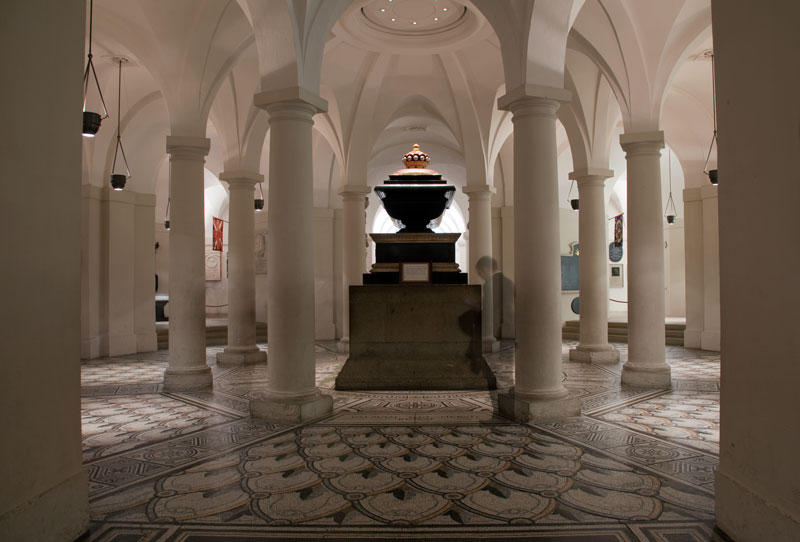
 I immediately thought of a church for silence. A place where one contemplates. I also thought of a graveyard. I have combined the two in the above image and have by use of a slow shutter speed added the figure of a man so that he appears as a ghost.
Other symbols that came to mind were a finger to ones lips, a person signing (the silence of the deaf). I also thought of a butterfly, a white room with a single white chair in it.
Poverty:
 This is perhaps a little too obvious as an image for poverty. A bit of a cliche. But probably most of my ideas for this subject do come into that category. I thought of a darned sock, a shoe with the sole coming apart. Discarded furniture, a broken pushchair. I then thought of a dinner plate with baked beans and a fried egg on it.
Overall though this exercise has been really good for making me think about how I am going to get a picture to say what I want it to. It's no good my knowing what was happening if my image doesn't say it to the viewer who wasn't there. All the exercises in this module have made me think a lot about what pictures I need to take for the final narrative. Actually they are making me think in general about my pictures. What do I want to say, how am I going to get it really display those messages/emotions.
Our subjects are:
growth, excess, crime, silence and poverty.
I have found this challenge very interesting. I've carried a notebook around with me for several weeks while I thought about this. I was trying to think of symbols that are different not a cliche. Well that is extremely difficult. I've spent hours in the bookstores looking at book covers to see what ideas have already been used. For example crime novels tend to have either a dagger, drops of blood, a murder victim or graphics on the cover.
I also thought long and hard about how the photo might be used. I was reminded of the HSBC ads where they use an image and show it can mean the opposite depending on the culture. I thought of where this could happen within my subject range. An example is a photo of a child's hand in an adults hand. This could indicate growth on the cover of a political manifesto. Equally it could imply crime in a police poster.
I thought of various symbols for each subject. I then went through my photos to see if I could find images that might be able to be used. I came up with the following:
Growth:


The industrial bee is often used as a symbol of hard work so I felt a good symbol for growth. I thought of many other symbols that are often used to represent growth. Plants, money modern skyscrapers. These are all positive symbols of growth. I then thought about growth as a negative and thought of cancer, over population, a different symbol would need to be used for these subjects.
Excess:

Crime:

Silence:
Other symbols that came to mind were a finger to ones lips, a person signing (the silence of the deaf). I also thought of a butterfly, a white room with a single white chair in it.
Poverty:

Overall though this exercise has been really good for making me think about how I am going to get a picture to say what I want it to. It's no good my knowing what was happening if my image doesn't say it to the viewer who wasn't there. All the exercises in this module have made me think a lot about what pictures I need to take for the final narrative. Actually they are making me think in general about my pictures. What do I want to say, how am I going to get it really display those messages/emotions.
Monday, 28 November 2011
Lens - Sharpness
I've been struggling for a wee while now trying to understand why my images have not been sharp. I've changed to TV to ensure I keep my shutter speed high to avoid camera shake. Tried different ways of focusing. Still wasn't ok. Finally decided to get my lens checked. Eureka! Problem with my lens. Canon have replaced power diaphragm unit, image stabiliser unit, rear lens unit, adjusted optical unit set to standard. No excuse now for unsharp images.
Sunday, 27 November 2011
Exhibition - Amazon
Amazon on at Somerset House is truly inspiring work. Photographers Sebatiao Salgado and Per-Anders Pettersson commissioned by Sky and WWF spent 3 years creating this work which aims to help save part of the forest in North-West Brazil. The photos are huge, stunning landscapes and powerful portraits of indigenous tribes. Although this project took three years these two photographers have been taking images in the area for a lot longer. The more I see these truly powerful exhibitions i realise that the best work comes out of projects that take years and years. The magazine that accompanies this exhibition (unbelievably is free!) I am studying for presentation.
Friday, 25 November 2011
Notes to exercise - A narrative picture essay 2nd attempt
My first attempt at a photo essay wasn't great, I know that but couldn't put my finger on why. I asked my tutor for feedback. Other than the obvious way the sw has put a strange version on my blog with loads of blank spaces was the layout. Not in nice neat columns. One of his suggestions was to study magazines and newspapers. So I did.
I'm still working through the sw issue. I just have to learn more and find free sw that will work for me. Not a bad option.
Note to myself: Learn how to achieve what you are trying to do with the tools you have. By the time you can afford the expensive sw you will know exactly what you want to use it for.
I've spent hours browsing magazines and book covers in stores. Studying the layout and how the subject matter is treated. Keeping in mind the next exercises I need to complete before the final assignment. I have put together another photo essay (in the post below). I'm happier with the layout, I need to think more about the comments and how the photos link together. The story I'm hoping to tell for my assignment will be strong so I need to think a lot about the images I need to connect them all. I'm becoming increasingly aware of how strong images put together well stand out from those around them. Since doing this study I'm becoming more aware of everything around me.
I'm still working through the sw issue. I just have to learn more and find free sw that will work for me. Not a bad option.
Note to myself: Learn how to achieve what you are trying to do with the tools you have. By the time you can afford the expensive sw you will know exactly what you want to use it for.
I've spent hours browsing magazines and book covers in stores. Studying the layout and how the subject matter is treated. Keeping in mind the next exercises I need to complete before the final assignment. I have put together another photo essay (in the post below). I'm happier with the layout, I need to think more about the comments and how the photos link together. The story I'm hoping to tell for my assignment will be strong so I need to think a lot about the images I need to connect them all. I'm becoming increasingly aware of how strong images put together well stand out from those around them. Since doing this study I'm becoming more aware of everything around me.
Tuesday, 22 November 2011
Saturday, 12 November 2011
Exhibitions - James Hyman Photography
A small selection of photographs from three very different photographers: Eugene Atget, Anna Fox and Lynne Cohen. The works of Eugene Atget were difficult to look at properly as they were in the office of the gallery staff (bizarre really) they were having a meeting so a little awkward to stand in front of the images for very long. However it did make me do a google search to view more of his works. A couple of his staircase images in the gallery I particularly liked. The lines, shape and light all come together brilliantly.
Anna Fox was my favourite in this exhibition. The images were part of her project Resorts, a view of Butlins holiday camps. Funny I had been thinking of a similar body of work, should have known this would have been done, (probably done lots). I do love this style of work and have slowly been finding the photographers who work in this genre. Martin Parr, Peter Dench and now Anna Fox. What I especially love is that in some ways they have the initial appearance of a family snapshot but when you study them they are far from that. They give a real glimpse into real family lives, the colour is an important element of the images and often are big and bold. I wonder how they will be viewed in 100 years. I can't help but feel they will be of more interest than the beautiful landscapes that are taken during the same period.
The third photographer was Lynne Cohen a Canadian photographer with a selection of her work that featured at the Venice Biennale. These images as stated in the publicity blurb "explore the mystery of unoccupied space and place". I am learning to see more in this genre of images but still they don't inspire me. I get more out of images of people.
Anna Fox was my favourite in this exhibition. The images were part of her project Resorts, a view of Butlins holiday camps. Funny I had been thinking of a similar body of work, should have known this would have been done, (probably done lots). I do love this style of work and have slowly been finding the photographers who work in this genre. Martin Parr, Peter Dench and now Anna Fox. What I especially love is that in some ways they have the initial appearance of a family snapshot but when you study them they are far from that. They give a real glimpse into real family lives, the colour is an important element of the images and often are big and bold. I wonder how they will be viewed in 100 years. I can't help but feel they will be of more interest than the beautiful landscapes that are taken during the same period.
The third photographer was Lynne Cohen a Canadian photographer with a selection of her work that featured at the Venice Biennale. These images as stated in the publicity blurb "explore the mystery of unoccupied space and place". I am learning to see more in this genre of images but still they don't inspire me. I get more out of images of people.
Monday, 7 November 2011
Workshop - The Picture Story
Did a one day workshop (organised through L.I.P.) with Martin Shakeshaft on the picture story. With 15 of us on the workshop with varying skills and Martin attempting to show us everything from successful documentaries to putting together a punchy small film we weren't going to be able to get lots of detail. Still we were encouraged to take a section of what we wanted and go with that. I chose to try and photograph a picture essay incorporating the important elements we had discussed in the morning session. If doing an editorial feature it would typically be between 2-7 images. The most important shot is the establishing shot. This image puts the story into perspective, places the story. It may be the only image used so must tell the whole story in that one image. Typically wide angle shot.
Next pace. A variety of images shot from different perspectives, long shot, mid shot, wide shot, close-up, relationships. Avoid boredom by changing the rhythms of the photographs.
We regrouped at the end of the day to discuss what each of us had done. I found the establishing shot extremely difficult. Martin told us this is always the hardest shot even for those who have been doing it for years.
For me these are all elements I will need to incorporate into my photo essay.
Next pace. A variety of images shot from different perspectives, long shot, mid shot, wide shot, close-up, relationships. Avoid boredom by changing the rhythms of the photographs.
We regrouped at the end of the day to discuss what each of us had done. I found the establishing shot extremely difficult. Martin told us this is always the hardest shot even for those who have been doing it for years.
For me these are all elements I will need to incorporate into my photo essay.
Wednesday, 2 November 2011
Evidence of Action
For this exercise we are asked to take just one photograph in which it can be seen that something has happened. The reading suggests that this image should be powerful. Something that tells a story in just one image.
I have just such a photo that I took after the riots.

I went to Brixton after the riots. I think this image is as powerful as many of those the media took of action shots at the time of the rioting. This image shows what happened. Even those caught up in the heat of the moment would have to reflect when seeing the results as shown here. Shortly after I took this photo most of the shop windows were boarded up, which in many ways hid the problem.
I have just such a photo that I took after the riots.

I went to Brixton after the riots. I think this image is as powerful as many of those the media took of action shots at the time of the rioting. This image shows what happened. Even those caught up in the heat of the moment would have to reflect when seeing the results as shown here. Shortly after I took this photo most of the shop windows were boarded up, which in many ways hid the problem.
Tuesday, 1 November 2011
Notes to exercise - A narrative picture essay
I had decided to use the Bloomsbury festival as my practice exercise as I work toward the Assignment 5. I tried to get a variety of pictures that would give the viewer a feel for the day, including a portrait, detail and the scene. The festival is mostly art and culture involving organisations and museums in the area.
The next part was to edit the photos down to between 5 and 15. I found this difficult especially as some of the photos weren't technically very good. What do I do? just use technically good pictures or put in those that tell the best story? I opted for the latter.
Now layout. Geez, I've no idea how to layout. I printed the pictures in various sizes and laid them out on the table trying to find groupings and sizes that worked best.
Next captions. Now I'm way outside of comfort zone. Hence the brief captions.
How do I now get if from scraps on the table into some kind of document. I finally went with MS publisher and saved as a pdf.
More hours on the Internet to find how I could get this into my blog journal. I tried a couple of sites where you upload your document then copy the code into blogger. First attempts had parts of pictures and loads of frustration. More research. Finally found Scribd.
Seems to work reasonably well without too many problems.
Feeling more than a little concerned about the final assignment.
The next part was to edit the photos down to between 5 and 15. I found this difficult especially as some of the photos weren't technically very good. What do I do? just use technically good pictures or put in those that tell the best story? I opted for the latter.
Now layout. Geez, I've no idea how to layout. I printed the pictures in various sizes and laid them out on the table trying to find groupings and sizes that worked best.
Next captions. Now I'm way outside of comfort zone. Hence the brief captions.
How do I now get if from scraps on the table into some kind of document. I finally went with MS publisher and saved as a pdf.
More hours on the Internet to find how I could get this into my blog journal. I tried a couple of sites where you upload your document then copy the code into blogger. First attempts had parts of pictures and loads of frustration. More research. Finally found Scribd.
Seems to work reasonably well without too many problems.
Feeling more than a little concerned about the final assignment.
Monday, 31 October 2011
Exhibition - UK Poverty Photo Exhibition
After seeing some of Liz Hingley's work and listening to her speak at the Canon Expo I was keen to see the body of work commissioned by 'Save the Children' for their UK Poverty Campaign. Just showed for three days at House of St Barnabas. Six photographers have each taken images around the UK depicting poverty. I found this to be a very strong body of work and incredibly moving. In a way that brings you closer to the people. You feel as if you have met them all yourself. The work isn't presented in a way that makes the families victims. Work like this is what I would like to be doing. Stories told like this really make you want to do something. To change political decisions. Visual stories have such strong impact. Talking to one of the organisers after seeing the work was enlightening too. She has worked in this area for many years and even she was moved and shocked by this work. That is an indication of how brilliant this work is. We discussed the problems of being able to finance bigger exhibitions of this work. Something to consider if doing work like this is how and who is going to fund it.
UK Poverty Photo Exhibition.
UK Poverty Photo Exhibition.
Wednesday, 26 October 2011
Canon Expo
Last year I went to the Canon Expo (at the business centre in Islington High St) and spent most of the time fondling products. This year I went and mostly ignored the sales side and spend the best part of two days going to the seminars. A couple are showing you products. i didn't attend those ones. The draw card for mw was Martin Parr. I have long admired his work and wanted to hear the man in person. I was really disappointed. He is not an inspirational speaker, I found him rather arrogant and condescending. But I was lifted by Peter Dench. I guess you could say he has modelled himself along similar lines and style to Martin Parr, but he is a very entertaining speaker, humble about his work, which is exceptional.
IThe other photogrpaher who really inspired me was Liz Hingley. A young photographer that already has loads of accolades and awards. Her work is closer to what I aspire to do, working closely with individuals or communities. She has gone to extraordinary lengths to get her pictures. Her project on religon is incredible as was her process. She joins the community she is photographing and lives along side them while taking her pictures. I'll be following her in the future. Her link for my reference:
http://www.lizhingley.com/
IThe other photogrpaher who really inspired me was Liz Hingley. A young photographer that already has loads of accolades and awards. Her work is closer to what I aspire to do, working closely with individuals or communities. She has gone to extraordinary lengths to get her pictures. Her project on religon is incredible as was her process. She joins the community she is photographing and lives along side them while taking her pictures. I'll be following her in the future. Her link for my reference:
http://www.lizhingley.com/
Thursday, 20 October 2011
Exhibition - Me
I have two of my smoking pictures on the walls of the Strand Gallery in the L.I.P. annual exhibition. Also have had another two selected for the LIP Shoreditch exhibition (part of photo month). Next goal is my own show.
Subscribe to:
Posts (Atom)